
Call us now :08071794442
 Send Inquiry
 Send Inquiry
Moulded Solid Rubber Soles and Heels ISI Certification
Price 45000 INR/ Number
Moulded Solid Rubber Soles and Heels ISI Certification Specification
- Heat Resistance
- Up to 70C
- Slip Resistance
- Compliant with ISI safety standards
- Abrasion Resistance
- Maximum volume loss: 250 mm
- Flexing Endurance
- No cracking after 30,000 cycles
- Service Life
- Long-lasting under diverse conditions
- Elongation at Break
- Minimum 250%
- Packaging
- Standard packing as per industry norms
- Tensile Strength
- Minimum 65 kg/cm as per IS 3400
- Hardness (Shore A)
- 65-85 Shore A
- Pattern
- Plain, Chevron, Customized designs available
- Application
- Footwear Industry Shoes, Boots, Safety Footwear
- Color
- Black or as specified
- Material
- Solid Rubber
- Size/Thickness
- As per customer requirement or ISI standard
- Product Name
- Moulded Solid Rubber Soles and Heels
- Water Absorption
- Less than 2% by mass
- Feature
- Hardwearing, Anti-slip, Flexible
Moulded Solid Rubber Soles and Heels ISI Certification Trade Information
- Minimum Order Quantity
- 30 Number
- FOB Port
- Pan India
- Payment Terms
- Paypal, Cash on Delivery (COD), Cash Advance (CA), Cash in Advance (CID), Cheque
- Supply Ability
- 30 Per Month
- Delivery Time
- 30 Days
- Main Export Market(s)
- Asia, Australia, Central America, North America, South America, Eastern Europe, Western Europe, Middle East, Africa
- Main Domestic Market
- All India
- Certifications
- ISI Mark Certification
About Moulded Solid Rubber Soles and Heels ISI Certification
Moulded solid rubber soles and heels hasbeen included in the mandatory ISI Certification Scheme under IS standard - IS5676. This product cannot be exported/imported or sold in Indian consumermarket without ISI Mark imprinted. We provide complete ISI Certificationconsultancy services for your product from start to end, during which assistyou in all types of documentation formalities.
Optimized for Tough Footwear Requirements
With a hardwearing, anti-slip, and flexible rubber compound, these soles and heels provide long-lasting performance in diverse environments. Whether for casual shoes, robust boots, or safety footwear, they deliver stability and durability, supporting both comfort and safety in daily use as well as heavy-duty settings.
Comprehensive ISI Certification Compliance
Every product undergoes extensive testing as per IS 3400 standards for mechanical properties, abrasion resistance, and flexing endurance. The soles and heels conform to ISI safety regulations, ensuring functionality and safety for manufacturers, dealers, and exporters seeking quality assurance for the Indian market.
FAQ's of Moulded Solid Rubber Soles and Heels ISI Certification:
Q: How are Moulded Solid Rubber Soles and Heels tested for ISI certification?
A: The soles and heels are evaluated for hardness (65-85 Shore A), tensile strength (minimum 65 kg/cm2), elongation at break (minimum 250%), abrasion resistance (maximum 250 mm3 volume loss), flexing endurance (no cracking after 30,000 cycles), and water absorption (less than 2% by mass), all as prescribed by ISI standards.Q: What applications are these rubber soles and heels suitable for in the footwear industry?
A: They are used for making shoes, boots, and safety footwear, providing enhanced durability, slip resistance, and comfort for both casual and industrial use cases. Their robust features make them suitable for environments requiring tough, long-lasting footwear.Q: When should a manufacturer seek ISI certification for their rubber soles and heels?
A: Manufacturers should pursue certification before marketing, distributing, or exporting products to ensure they comply with Indian standards and meet buyer expectations for safety and quality, as required within regulated markets.Q: Where can customized patterns and sizes be requested for these products?
A: Customized designs, sizes, and thicknesses can be ordered through producers, suppliers, or distributors. Options include plain, chevron, or bespoke patterns, tailored according to specific customer or ISI requirements.Q: What is the process for obtaining ISI certification for rubber soles and heels?
A: The process involves manufacturing the products according to ISI specifications, conducting necessary tests for mechanical and safety properties, and submitting samples to authorized certification bodies for inspection, approval, and issuance of the certification.Q: How does the slip resistance feature benefit safety footwear?
A: Compliant with ISI safety standards, the anti-slip properties ensure better grip on various surfaces, reducing the risk of accidents and enhancing protection for wearers in industrial and challenging environments.Q: What advantages do these rubber soles and heels provide over non-ISI certified products?
A: They ensure superior performance with verified durability, heat, and water resistance, low abrasion, and reliable slip protection. ISI certification also assures buyers of consistent quality, longer service life, and regulatory compliance.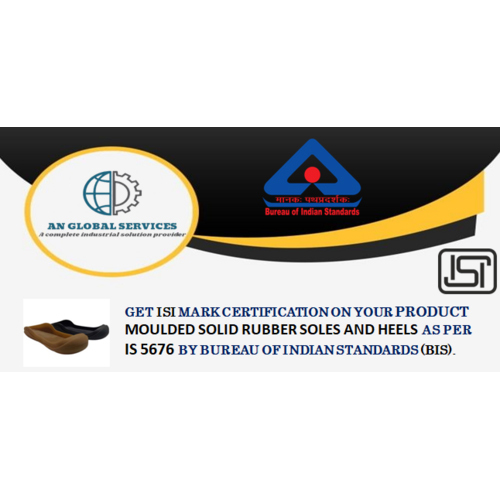
Tell us about your requirement

Price:
Quantity
Select Unit
- 50
- 100
- 200
- 250
- 500
- 1000+
Additional detail
Mobile number
Email

More Products in ISI Certification Services Category
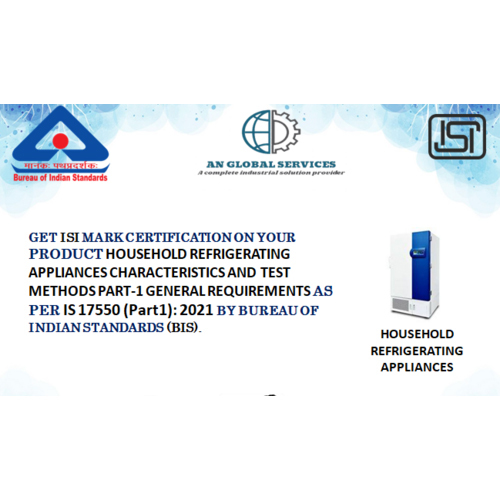
Household Refrigerating Appliances ISI Certification
Price 45000 INR / Number
Minimum Order Quantity : 30

 Send Inquiry
Our Products
- ISI Certification Services
- ISI Marking Services
- BIS Registration Services
- Solar Panel Certification Services
- WPC Certification Services
- Hallmarking Services
- Laser Soldering Machine
- HDPE Tarpaulin
- EPR Registration Services
- NABL Consultancy Services
- Laboratory Equipment
- MSME Registration Services
- Trademark Registration Services
- Calibration Certification Services
- Solar Panel Testing Service
- BEE Registration Services
- TEC Certification Services
- Gold Hallmarking Registration Services
- Testing Equipment
- Handicapped Tricycle
- Organic Makhana
- Protein
- Sanitary napkins
- Adult diaper
- Baby diaper
- Lactose 200 mesh


UNIT NO. S-63, 7th FLOOR, URBTECH NPX, PLOT NO. C-1, SECTOR-153, Sector 153, Noida, Gautambuddha NagarNoida - 201310, Uttar Pradesh, India

Mr Aayush Sharma
(Founder & CEO)
Mobile :08071794442
 Send Inquiry
 Send SMS
Developed and Managed by Infocom Network Private Limited.
