
Call us now :08071794442
 Send Inquiry
 Send Inquiry
ISI Certification For Medical Products
ISI Certification For Medical Products Specification
- Audit Requirement
- Factory inspection and product testing by BIS
- Brand Impact
- Enhances credibility and consumer trust
- Scope
- Covers various medical devices and products
- Product Name
- ISI Certification For Medical Products
- Applicable For
- Medical Products
- Objective
- Ensuring quality, safety, and reliability of medical products
- Geographical Coverage
- Applicable across India
- Support Provided
- Guidance on documentation and compliance process
- Validity of Certification
- Generally valid for 1 or 2 years, subject to renewal
- Certification Type
- ISI Certification
- Sample Testing
- Mandatory as part of certification process
- Process Duration
- Variable based on product and documentation
- Marking Requirement
- ISI Mark to be displayed on certified products
- Market Approval
- Mandatory for specific medical devices in India
- Fee Structure
- Dependent on product category and BIS fee schedule
- Document Requirement
- Technical documents, product sample, test reports, application form
- Certification Authority
- Bureau of Indian Standards (BIS)
About ISI Certification For Medical Products
ISI Certification For Medical Products may include technical drawings, product specifications, and test reports. The first step in obtaining ISI certification is to identify the relevant standards that your medical product needs to comply with. For medical products, the relevant standards may include IS 13485:2016 for medical devices - quality management systems, IS 16222:2010 for disposable infusion sets, and IS 15734:2007 for sterilization of medical devices. They can also assist with the paperwork and other logistical aspects of obtaining certification. Once your ISI Certification For Medical Products meets all the necessary requirements, BIS will issue an ISI certificate.
Comprehensive Audit and Testing
To obtain ISI Certification, manufacturers must undergo a detailed audit, including factory inspections and mandatory product sample testing conducted by BIS. This ensures that medical products consistently meet established quality and safety standards, enhancing their trustworthiness for end-users and stakeholders.
Nationwide Applicability and Market Access
The ISI Certification for Medical Products is recognized throughout India. Having the ISI Mark is not just a regulatory requirement for specific medical devices, but it also facilitates smoother market entry and acceptance. Both domestic and international entities benefit from broader distribution and credibility in the Indian market.
FAQ's of ISI Certification For Medical Products:
Q: How does the ISI Certification process for medical products work?
A: The process begins with submitting an application, including technical documents, product samples, and test reports to the Bureau of Indian Standards (BIS). This is followed by a comprehensive factory audit and product testing. Upon successful evaluation, the ISI Mark is granted to qualifying products.Q: What kind of medical products require ISI Certification in India?
A: ISI Certification is mandatory for specific medical devices and products as notified by Indian regulations. The scope covers various categories, including diagnostic equipment, surgical products, and certain disposable items, depending on the BIS listing.Q: When should manufacturers apply for renewal of their ISI Certification?
A: The ISI Certification is typically valid for one or two years. Manufacturers are advised to initiate the renewal process before expiry to ensure uninterrupted certification and market access, as the renewal also involves review and possibly re-inspection or testing.Q: Where is the ISI Mark required to be displayed on certified medical products?
A: Certified medical products must clearly display the ISI Mark on the product itself or its primary packaging, as specified by BIS guidelines. This mark signifies the product's compliance with recognized Indian standards.Q: What documents are necessary for obtaining ISI Certification for medical products?
A: Applicants must provide technical documents, an application form, product samples, and relevant test reports. BIS may also request additional compliance-related paperwork during the evaluation process.Q: How does ISI Certification benefit dealers, suppliers, and manufacturers?
A: Holding ISI Certification not only fulfills regulatory requirements but also enhances the brand's credibility, fosters consumer trust, and provides a competitive edge in the Indian market.
Tell us about your requirement

Price:
Quantity
Select Unit
- 50
- 100
- 200
- 250
- 500
- 1000+
Additional detail
Mobile number
Email

More Products in ISI Certification Services Category
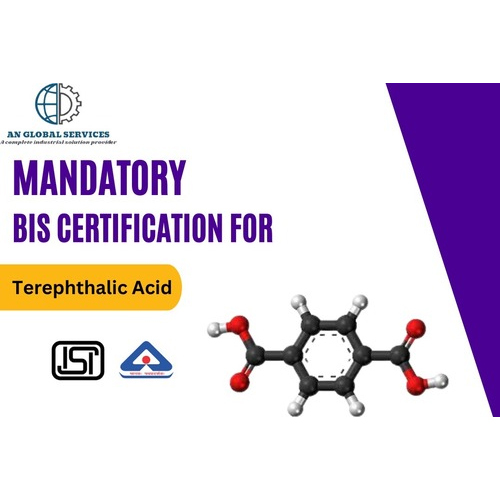
Mandatory BIS/ISI certification on Terephthalic Acid
Price 50000 INR / Number
Minimum Order Quantity : 1 Number

 Send Inquiry
Our Products
- ISI Certification Services
- ISI Marking Services
- BIS Registration Services
- Solar Panel Certification Services
- WPC Certification Services
- Hallmarking Services
- Laser Soldering Machine
- HDPE Tarpaulin
- EPR Registration Services
- NABL Consultancy Services
- Laboratory Equipment
- MSME Registration Services
- Trademark Registration Services
- Calibration Certification Services
- Solar Panel Testing Service
- BEE Registration Services
- TEC Certification Services
- Gold Hallmarking Registration Services
- Testing Equipment
- Handicapped Tricycle
- Organic Makhana
- Protein
- Sanitary napkins
- Adult diaper
- Baby diaper
- Lactose 200 mesh


UNIT NO. S-63, 7th FLOOR, URBTECH NPX, PLOT NO. C-1, SECTOR-153, Sector 153, Noida, Gautambuddha NagarNoida - 201310, Uttar Pradesh, India

Mr Aayush Sharma
(Founder & CEO)
Mobile :08071794442
 Send Inquiry
 Send SMS
 Call Me Free
Developed and Managed by Infocom Network Private Limited.
